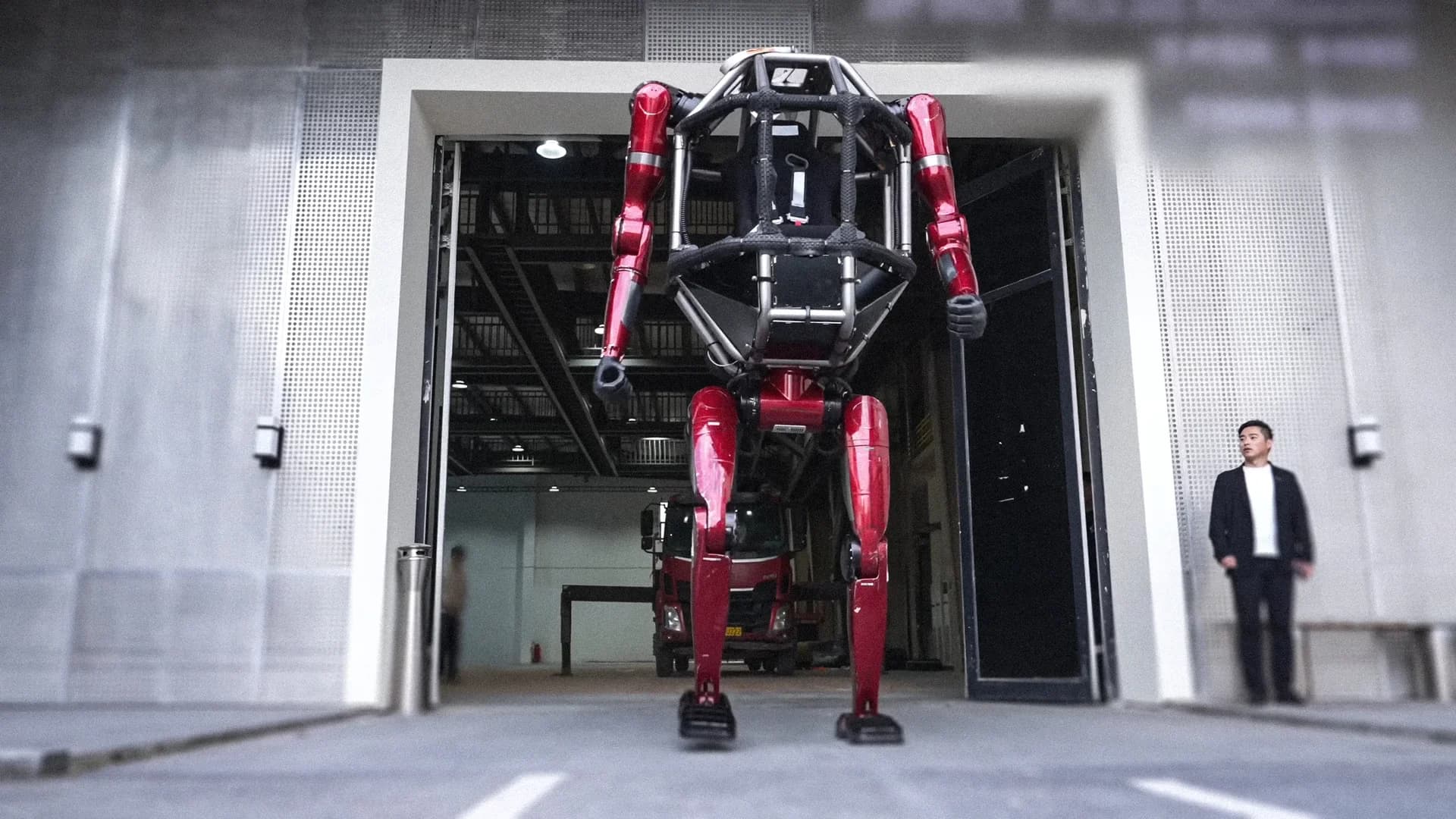
Photo via Inc.
According to Inc., a Chinese robotics company recently unveiled a transforming humanoid robot capable of performing heavy industrial tasks with remarkable precision. The demonstration, which showed the machine demolishing a concrete wall in a single strike, signals a significant leap forward in physical artificial intelligence capabilities. While the viral moment captured attention, industry observers note the real story involves China's broader strategic push to dominate the robotics and automation sector.
The implications for American manufacturers and logistics companies are substantial. Charlotte's growing industrial and distribution sectors could face competitive pressures as automation technology becomes more accessible and affordable. Companies in the region that depend on labor-intensive processes may need to accelerate their own automation investments to remain competitive, particularly as Chinese robotics firms improve their capabilities and pricing models.
This development underscores a widening gap in the physical AI race between the United States and China. While American tech companies focus heavily on software and digital AI applications, Chinese manufacturers are investing heavily in hardware robotics that could transform warehouse operations, construction, and heavy manufacturing. For Charlotte-area business leaders, particularly those in logistics and supply chain management, staying informed about these technological advances becomes crucial for long-term strategic planning.
The robotics revolution may create both challenges and opportunities for regional businesses. Companies that embrace automation early could gain significant efficiency advantages, while those that ignore the trend risk falling behind competitors. Industry analysts suggest that the next five years will be critical for American manufacturers to demonstrate they can innovate and scale robotic systems competitively, or risk ceding yet another technological advantage to international competitors.