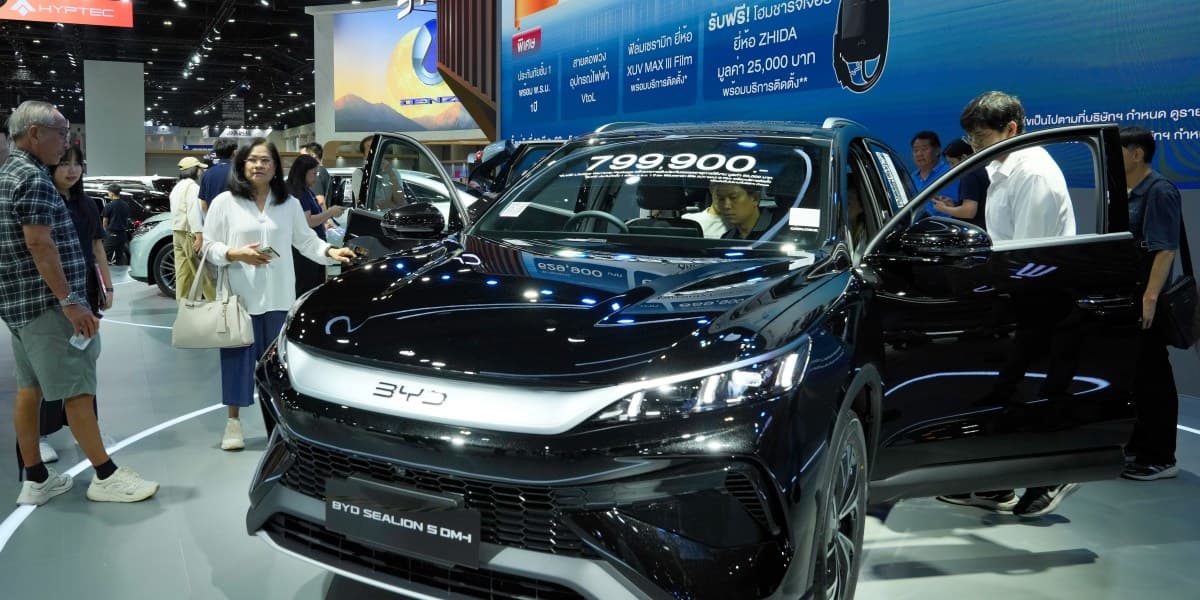
Photo via Fortune
According to Fortune, Chinese electric vehicle manufacturer BYD achieved a milestone at the Bangkok Auto Show in early April, securing more orders than any competing automaker—including Toyota—for the first time. The achievement underscores the rapid shift in automotive market dynamics as global consumers increasingly embrace electrification, particularly in emerging markets across Southeast Asia.
The surge in EV adoption across Southeast Asia reflects broader geopolitical and economic pressures reshaping energy policy in the region. As countries seek alternatives to traditional fossil fuel dependencies, electric vehicles have become a strategic priority. This transition is creating new opportunities and competitive pressures that ripple across the global automotive supply chain, including North Carolina's significant automotive manufacturing base.
For Charlotte-area businesses, particularly those in automotive manufacturing, logistics, and component supply, the rise of Chinese EV makers presents both opportunities and challenges. Regional manufacturers may benefit from increased demand for parts, materials, and logistics services as supply chains reorganize around electric vehicle production. However, competition from lower-cost Chinese manufacturers could pressure pricing and market share.
As the global automotive industry continues its electric transition, stakeholders in Charlotte's business community should monitor how international competition and changing consumer preferences reshape domestic manufacturing and supply chain strategies. The stakes are significant for the region's industrial economy and employment landscape.