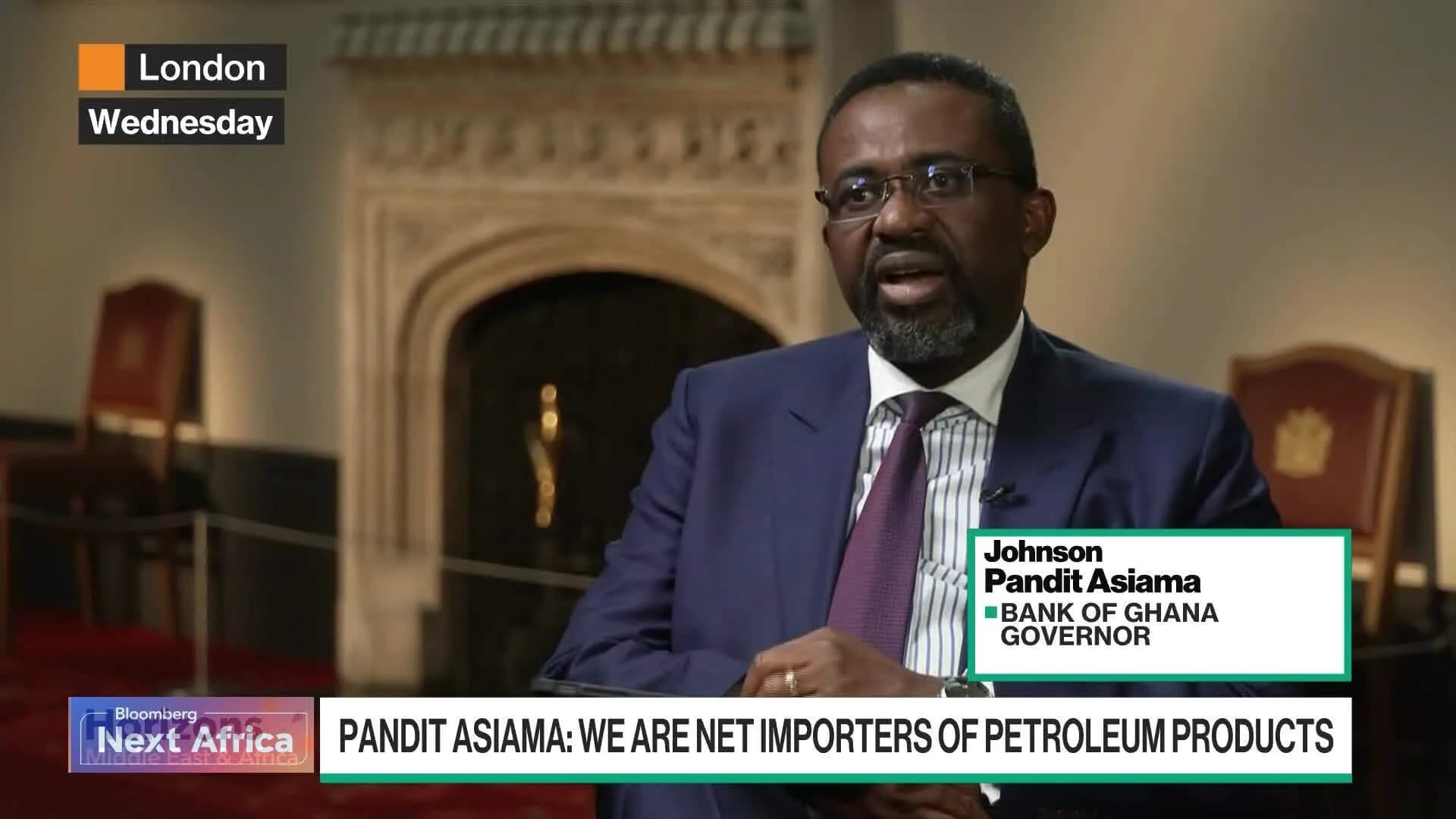
Photo via Bloomberg Markets
Ghana's central bank is taking a cautiously optimistic stance on the nation's economic outlook, even as global uncertainties continue to weigh on emerging markets. According to Bloomberg Markets, Bank of Ghana Governor Johnson Pandit Asiama indicated that the country's fundamental resilience has held up under pressure from elevated oil prices and geopolitical tensions in the Middle East. This assessment matters for international investors and multinational corporations operating across West Africa, including those with Charlotte-area headquarters.
The governor's comments suggest that monetary policy could shift toward easing once external shocks subside, signaling potential relief for borrowers and businesses seeking credit expansion. For Charlotte-based companies with operations or supply chain exposure in West Africa, this development could indicate improving conditions for investment and expansion in the region. A more accommodative monetary environment would typically lower borrowing costs and stimulate business activity across Ghana's economy.
The resilience narrative emerging from Accra stands in contrast to headwinds facing many emerging markets, where inflation concerns and currency pressures have forced central banks to maintain restrictive policies. Ghana's ability to weather these storms reflects both policy discipline and structural economic strengths, though the bank continues to monitor external risks closely. Regional economic stability benefits financial services firms and logistics companies with African operations.
For businesses watching currency markets and emerging economy trends, Ghana's steady hand offers a measure of confidence in West African economic prospects. The Bank of Ghana's willingness to consider future rate adjustments suggests officials believe inflation pressures are gradually moderating, even if global risks persist. Companies hedging emerging market exposure or evaluating African expansion strategies should track these signals closely as monetary policy frameworks evolve across the region.