Photo via Calculated Risk
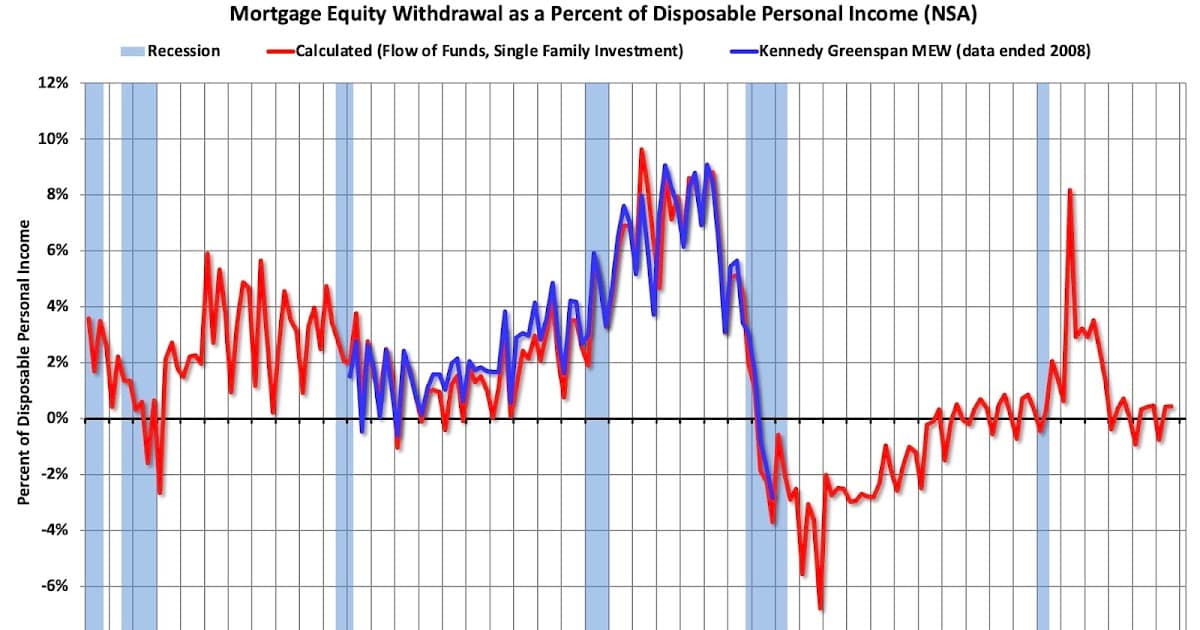
The practice of tapping home equity for spending—colloquially dubbed the "Home ATM" during the housing boom—has largely dried up in the third quarter, according to new data from the Federal Reserve's Financial Accounts of the United States. Quarterly mortgage debt increases have contracted significantly from the robust growth rates of the mid-2000s, reflecting both tighter lending standards and changing borrower behavior in today's market environment.
The "Home ATM" phenomenon was a defining characteristic of the housing bubble era, when rapidly appreciating property values encouraged widespread borrowing against home equity. This trend carried severe consequences when housing prices reversed course, leaving millions of homeowners underwater on their mortgages and fueling the subsequent financial crisis. The latest quarterly figures from the Federal Reserve's Flow of Funds report reveal a stark contrast to those volatile years, with mortgage debt expansion now moving at a measured pace.
The pullback in equity extraction signals either rising consumer caution or diminished home price appreciation—or both. As housing markets stabilize and memories of the last cycle linger, borrowers appear far more reluctant to treat their homes as piggy banks, marking a fundamental shift from the risk-laden leverage strategies of the pre-crisis period.