Photo via Fast Company
According to Zillow's latest 12-month housing forecast, the U.S. home price market is entering a period of stagnation. The real estate data firm projects home prices will grow at essentially 0% between March 2026 and March 2027—a downward revision from last month's forecast of +0.5% growth. This represents a significant cooling from current year-over-year gains of +0.8%, suggesting that the post-pandemic housing boom's momentum has largely dissipated.
The moderation could carry a silver lining for Charlotte-area homebuyers and investors. As national home price growth slows below income growth—which is currently rising at 3.9% annually—housing affordability should gradually improve, assuming mortgage rates remain stable. For a region that has seen steady population inflows and rising home values, a slower appreciation rate may provide relief to first-time buyers and those seeking to relocate to the Charlotte market.
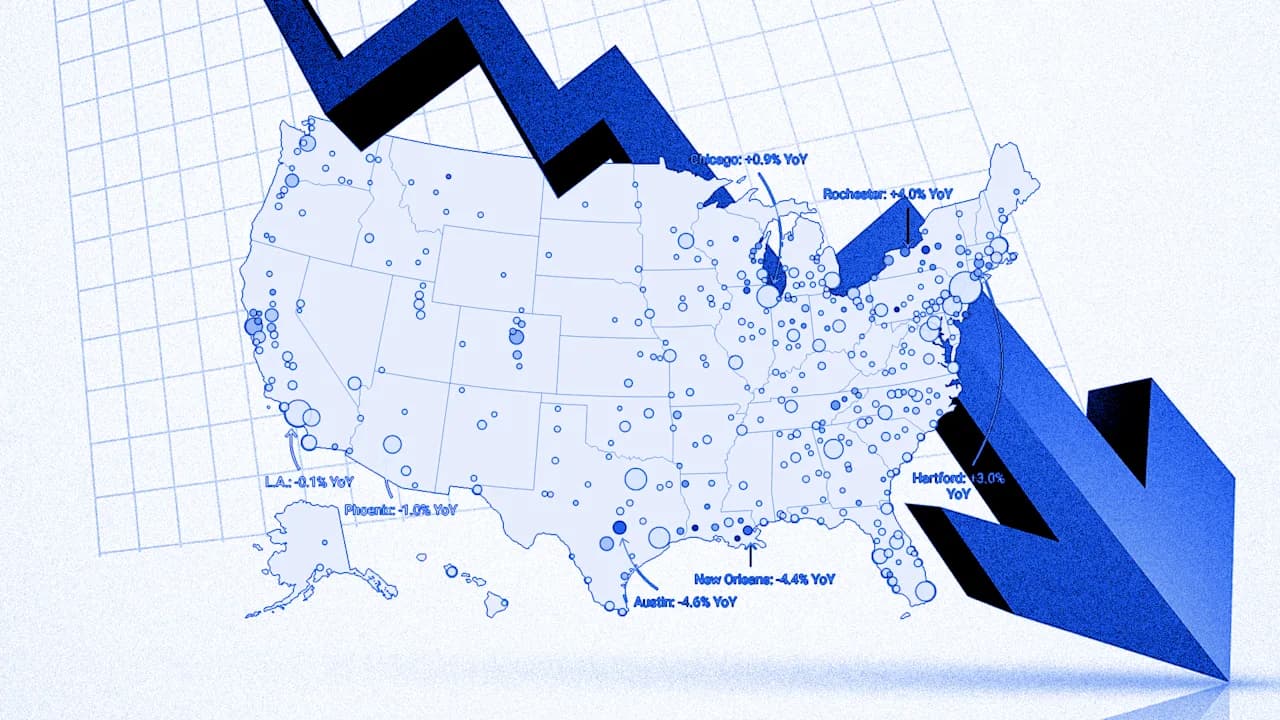
Zillow's analysis reveals stark regional variation across the nation's 300 largest metro areas. Sun Belt markets, particularly in Southwest Florida and South Texas, are experiencing the most significant softness, with some areas facing price declines of 3–7% over the forecast period. Conversely, smaller Rust Belt metros in New York, Pennsylvania, and Wisconsin are projected to see appreciation of 3–5%, suggesting demand patterns are shifting away from pandemic-era hot spots.
For Charlotte business leaders and real estate professionals, the broader message is cautious stability. While the national market won't turn negative, the days of double-digit appreciation appear over. This environment may favor local property developers and real estate firms that can adapt to tighter margins and slower transaction velocity, while creating opportunities for value-focused investors in a more balanced market.