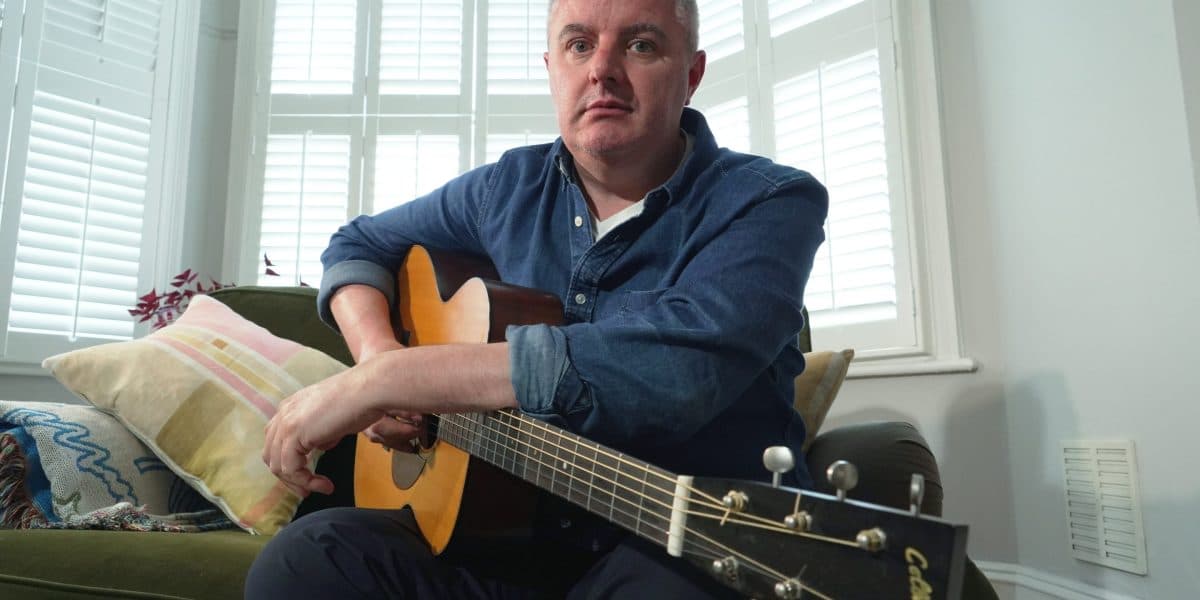
Photo via Fortune
The intersection of artificial intelligence and creative expression is becoming increasingly relevant as musicians and artists explore how technology can help them overcome physical limitations. According to Fortune, Samuel Smith, a 49-year-old singer-songwriter, has turned to AI tools to sustain his music career after Parkinson's disease significantly impaired his ability to play guitar—a skill that had defined his work for decades.
Smith's journey underscores a broader conversation about accessibility in creative fields. Diagnosed with the progressive neurological disorder in 2020, he faced the prospect of abandoning the craft that shaped his identity. Rather than step away entirely, Smith leveraged AI technology to adapt his workflow, allowing him to continue composing and producing Americana music. His recent album release demonstrates that technology can serve as an equalizer for artists facing health challenges.
For Charlotte's growing tech and creative communities, Smith's experience highlights opportunities at the intersection of healthcare innovation and artistic expression. As the Queen City continues to develop its tech ecosystem and attract companies focused on accessibility solutions, stories like Smith's exemplify real-world applications that extend beyond traditional business use cases.
The music industry remains divided on AI's broader implications for artistic integrity and intellectual property, yet examples like Smith's demonstrate meaningful humanitarian applications. His ability to continue creating suggests that thoughtfully implemented AI tools can preserve livelihoods and enable artists to maintain their professional contributions despite debilitating conditions.