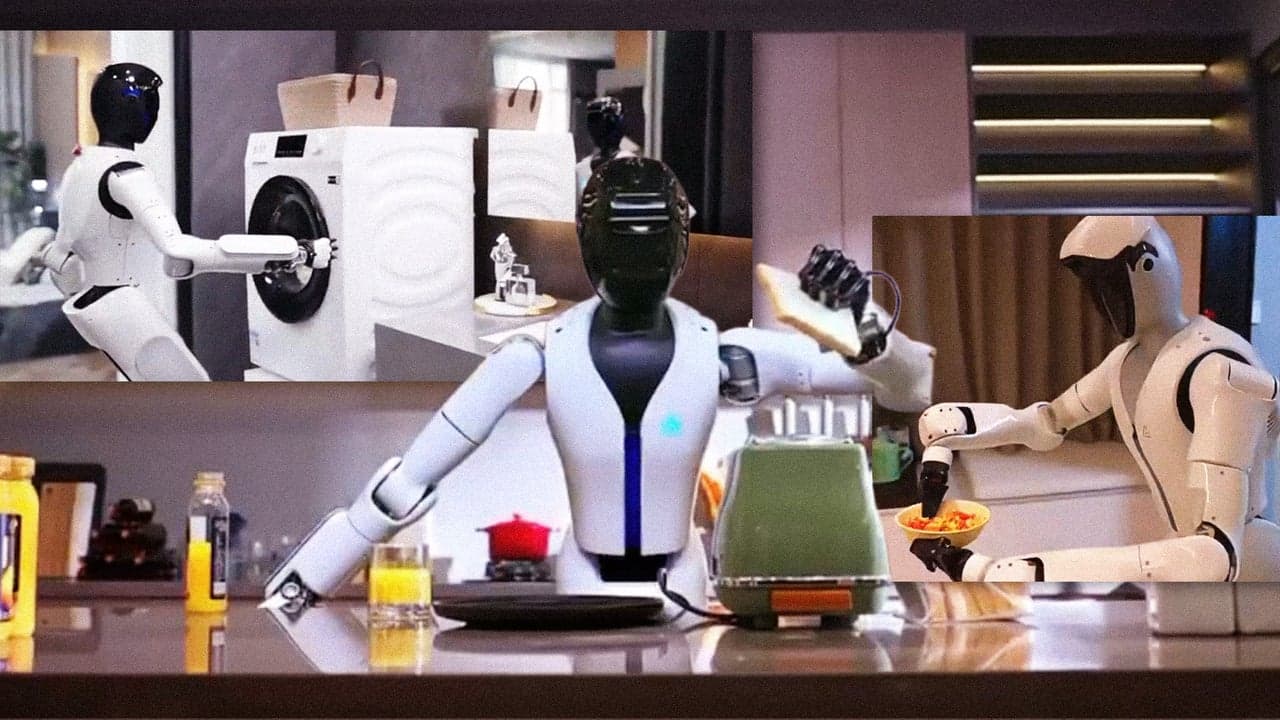
Photo via Fast Company
The robotics industry is at an inflection point. Chinese startup GigaAI recently announced plans to deploy its SeeLight S1 humanoid robot—capable of chopping vegetables, doing laundry, and making beds—beginning in 2027, backed by Huawei's investment arm and state research centers. Meanwhile, U.S. companies like San Francisco-based Gatsby are testing on-demand robot cleaning services priced at $150 per session. Morgan Stanley projects the humanoid robot market will reach $5 trillion by 2050, making this a space Charlotte's innovation leaders should monitor closely.
However, industry experts caution that widespread home deployment faces significant hurdles. Mark Rolston, Chief Creative Officer of argodesign and designer of Apptronik's humanoid, argues that current robots cannot reliably perform household tasks autonomously. The fundamental challenge: home environments are unpredictable 3D spaces that change daily, unlike controlled factory floors where robots currently excel. Safety concerns—including potential injuries from falling machines—mean regulators will likely require years of commercial warehouse testing before approving household deployments.
China is aggressively addressing these obstacles through real-world data collection. Shenzhen-based OneRobotics has secured contracts to deploy robots in actual homes, elder care facilities, and retail spaces to gather the structured data necessary for AI training. Other Chinese firms are stress-testing robots in live sports arenas to simulate unpredictable environments. This approach contrasts sharply with U.S. companies' reliance on service models requiring human remote control for complex tasks.
For Charlotte businesses, the implications span multiple sectors. Companies in logistics, healthcare, and commercial real estate should consider how humanoid robots might transform operations—whether through warehouse automation, elder care support, or facility management. While $15,000 consumer models remain years away from mainstream adoption, early adopters in regulated commercial environments are already positioning themselves for competitive advantage as the technology matures.