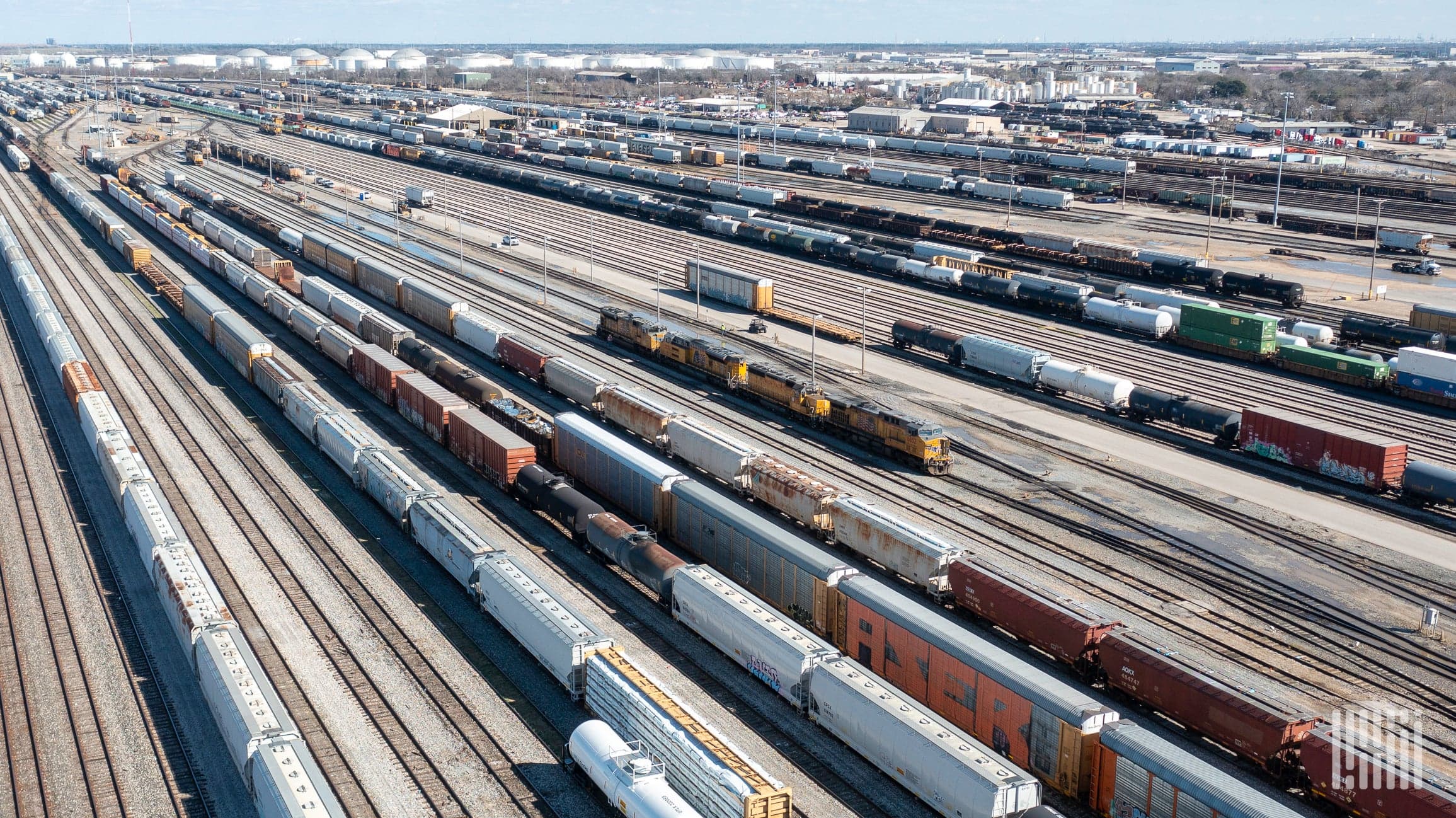
Photo via FreightWaves
The nation's rail freight sector is benefiting from a robust uptick in intermodal traffic—the movement of freight containers between trucks and rail lines—according to industry data. This growth reflects broader strength in U.S. manufacturing and industrial output, suggesting that supply chain networks are operating at healthy capacity levels. For Charlotte's logistics and distribution hub community, these trends indicate sustained demand for warehousing, last-mile delivery, and intermodal facilities.
Intermodal rail transportation has become increasingly central to North American freight strategy, offering shippers a cost-effective alternative to all-truck transport over long distances. The double-digit growth rates underscore how companies are optimizing their logistics networks to balance efficiency with rising fuel costs and driver shortages. Charlotte's position as a major East Coast distribution center makes these trends particularly relevant to local trucking companies and 3PL providers.
The surge in intermodal activity also reflects sustained consumer demand and manufacturing resilience across industries. Industrial output improvements suggest confidence in economic stability, even as companies navigate ongoing supply chain complexities. For Charlotte-area businesses involved in freight forwarding, logistics technology, and transportation services, strong rail intermodal growth creates opportunities for partnerships and operational expansion.
As intermodal rail continues its upward trajectory, logistics professionals in the Charlotte region should monitor how these trends affect port operations, warehouse utilization, and truck-rail partnerships. The data reinforces the strategic importance of multimodal transportation networks in maintaining competitive supply chain capabilities.