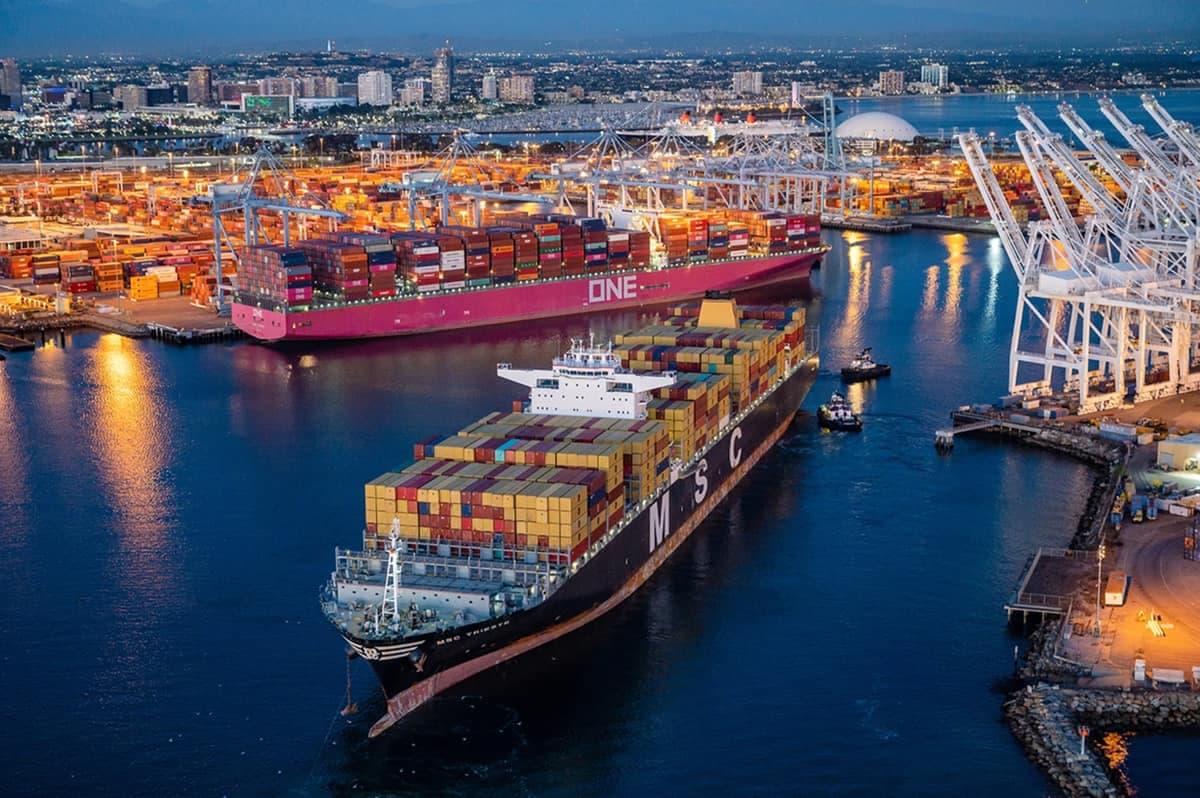
Photo via FreightWaves
According to FreightWaves, the U.S. Maritime Administration (Marad) is moving forward with an ambitious initiative to explore nuclear power for commercial shipping operations. The agency has established a partnership with the Port of Long Beach, one of the nation's busiest container terminals, to pilot small modular reactors (SMRs) as a potential power source for cargo vessels. This collaboration marks a significant step toward decarbonizing the maritime industry and reducing reliance on traditional fossil fuels.
Small modular reactors offer a promising alternative for the shipping sector, which has faced mounting pressure to lower emissions and meet increasingly stringent environmental standards. SMRs are designed to be more scalable and flexible than conventional nuclear power plants, making them potentially suitable for maritime applications where space and weight considerations are critical. The pilot program at Long Beach will test the feasibility, safety protocols, and operational logistics of integrating this technology into existing port infrastructure and vessel designs.
The initiative underscores the federal government's commitment to advancing clean energy solutions across major transportation hubs. Success with this pilot could pave the way for broader adoption of nuclear propulsion in the commercial shipping fleet, positioning the U.S. as a leader in sustainable maritime innovation and helping the industry achieve its carbon reduction goals.