Photo via Fast Company
The construction industry is experiencing a resurgence in mass timber building, with around 2,700 projects either completed or underway across the U.S.—double the number from just two years ago. This shift represents a dramatic departure from a century of steel-and-concrete dominance, driven largely by the environmental imperative to reduce carbon emissions. Charlotte's real estate market, increasingly focused on sustainability credentials to attract tenants and investors, should take note of this emerging building technology.
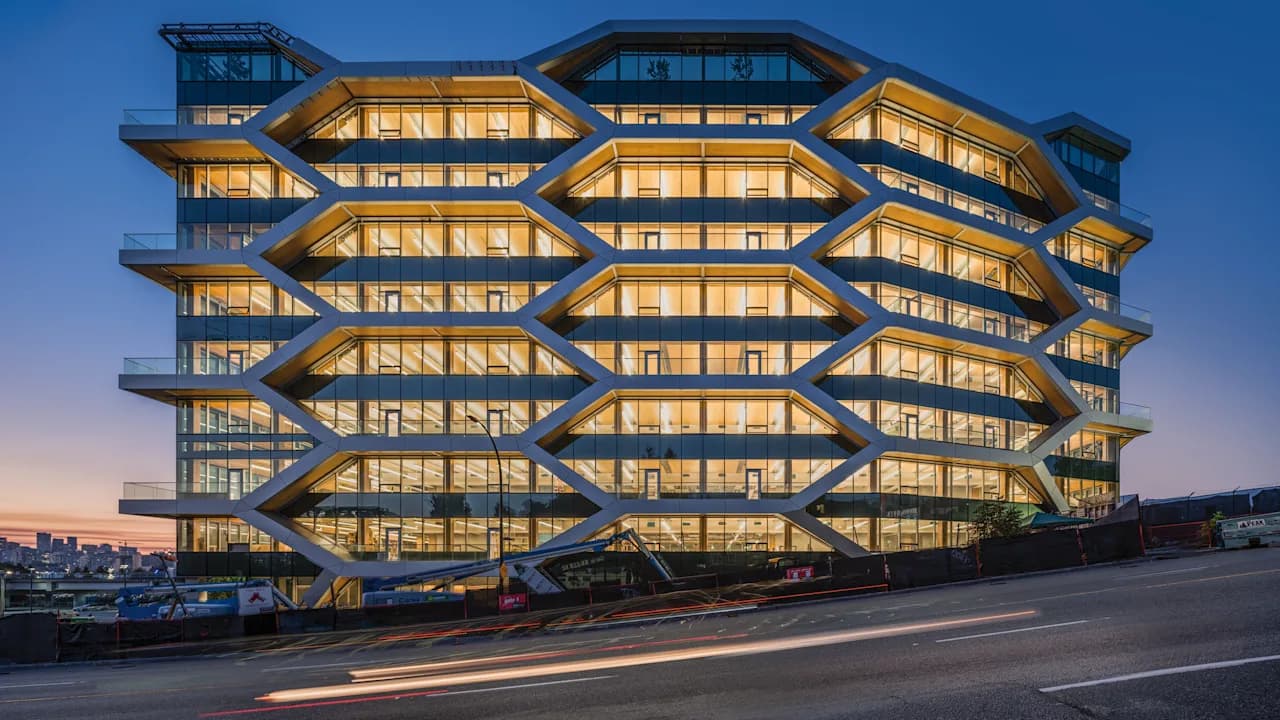
Vancouver's recently completed Hive office tower showcases how mass timber can address both climate and safety concerns simultaneously. According to Dialog, the Toronto architecture firm behind the design, the 10-story building sequesters 4,403 metric tons of CO2—equivalent to removing 1,300 vehicles from roads annually. The project received $2.5 million USD in federal Canadian funding plus provincial support, signaling significant government backing for wood-based construction innovation.
A key innovation driving adoption is the 'tectonic joint,' a structural component that allows wooden beams to flex slightly during seismic events rather than fail catastrophically like concrete and steel. The Hive's perimeter-braced system eliminates the traditional concrete core, reducing overall carbon footprint while maintaining structural integrity. Martin Nielsen, Dialog partner, notes that wood's flexibility—demonstrated in centuries-old Japanese pagodas—outperforms rigid materials when buildings experience seismic stress.
For Charlotte developers considering mass timber projects, the primary barriers remain regulatory and financial. Building codes historically favored concrete and steel, and mass timber projects face higher insurance premiums. However, as this technology matures and governments invest in demonstration projects, costs should decline. Whether Charlotte's relatively low seismic risk will accelerate adoption, or whether the focus remains on carbon reduction benefits, remains to be seen—but the momentum is clearly building.