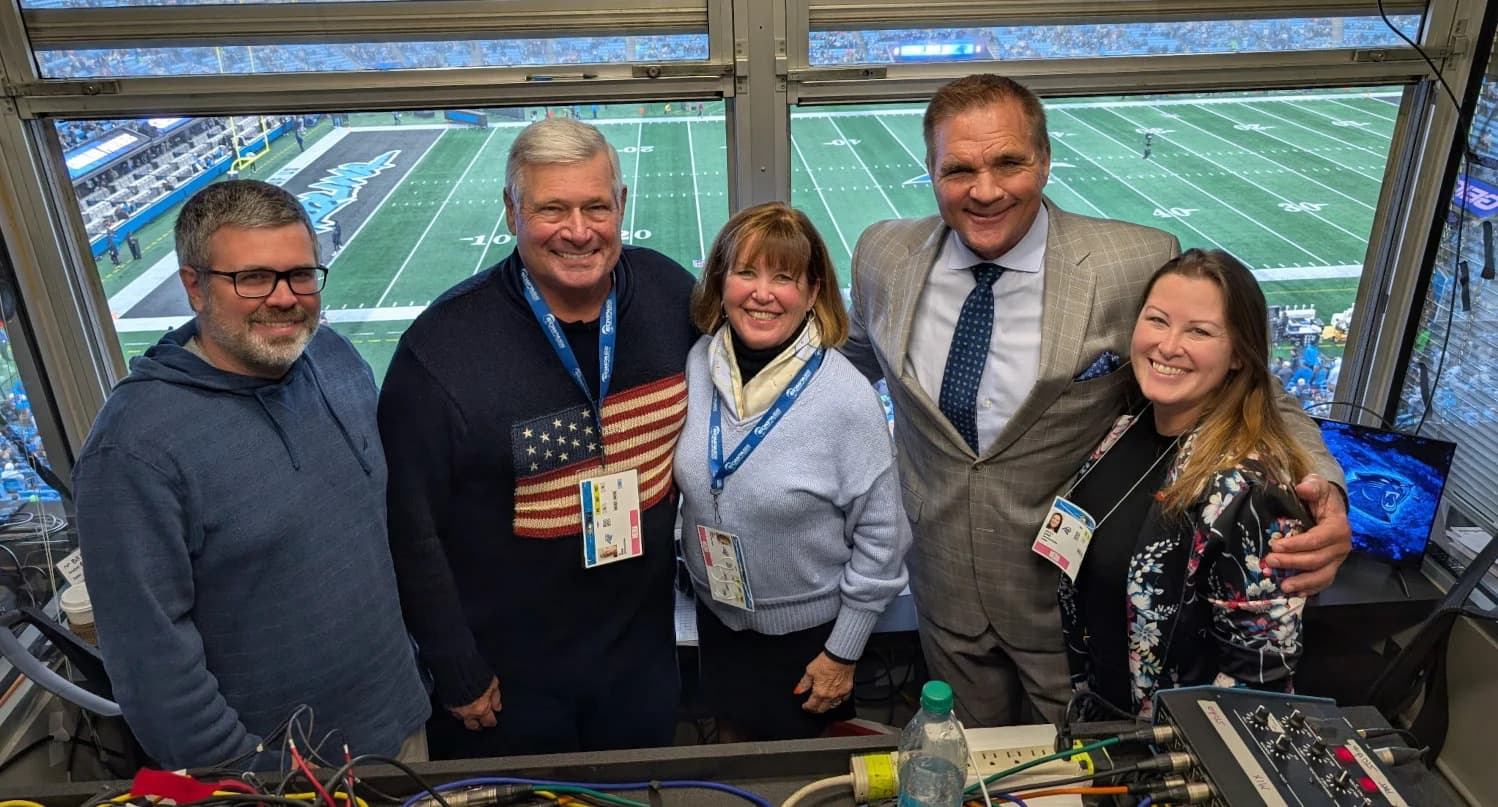
Photo via Yahoo! News
Bill Rosinski, who established himself as the voice of the Carolina Panthers during the franchise's inaugural season, recently captured widespread social media attention by sharing a rejection notice he received from the Baltimore Ravens. The 72-year-old broadcaster had applied for the Ravens' open play-by-play position but was met with a standard form rejection rather than an interview opportunity. According to Yahoo! News, Rosinski posted the notice as a lighthearted moment, never anticipating the post would resonate so broadly across his professional network and beyond.
The viral response to Rosinski's post underscores ongoing conversations about age discrimination and opportunity in broadcast sports—an industry where Charlotte's own media landscape has witnessed significant evolution alongside the Panthers' three-decade tenure. Rosinski's willingness to share his rejection publicly sparked discussions among sports media professionals and business leaders about hiring practices and the value of experience in competitive industries. His candid approach resonated with audiences who appreciated his humor in facing a situation many older professionals encounter when pursuing new opportunities.
The incident highlights broader workforce challenges facing established professionals across Charlotte's media, sports, and entertainment sectors. As regional organizations continue to evolve their talent acquisition strategies, stories like Rosinski's serve as touchstones for examining how companies balance innovation and diversity with institutional knowledge and professional experience. The Panthers' long history with Rosinski demonstrates the value of institutional memory and deep market connections that seasoned broadcasters bring to their roles.
Rosinski's viral moment, though rooted in a personal disappointment, has inadvertently sparked meaningful conversations about age, experience, and opportunity in professional sports broadcasting. For Charlotte-area business leaders and media professionals, his story offers a timely reminder about the importance of inclusive hiring practices and the often-overlooked assets that experienced talent brings to organizational success across all sectors.