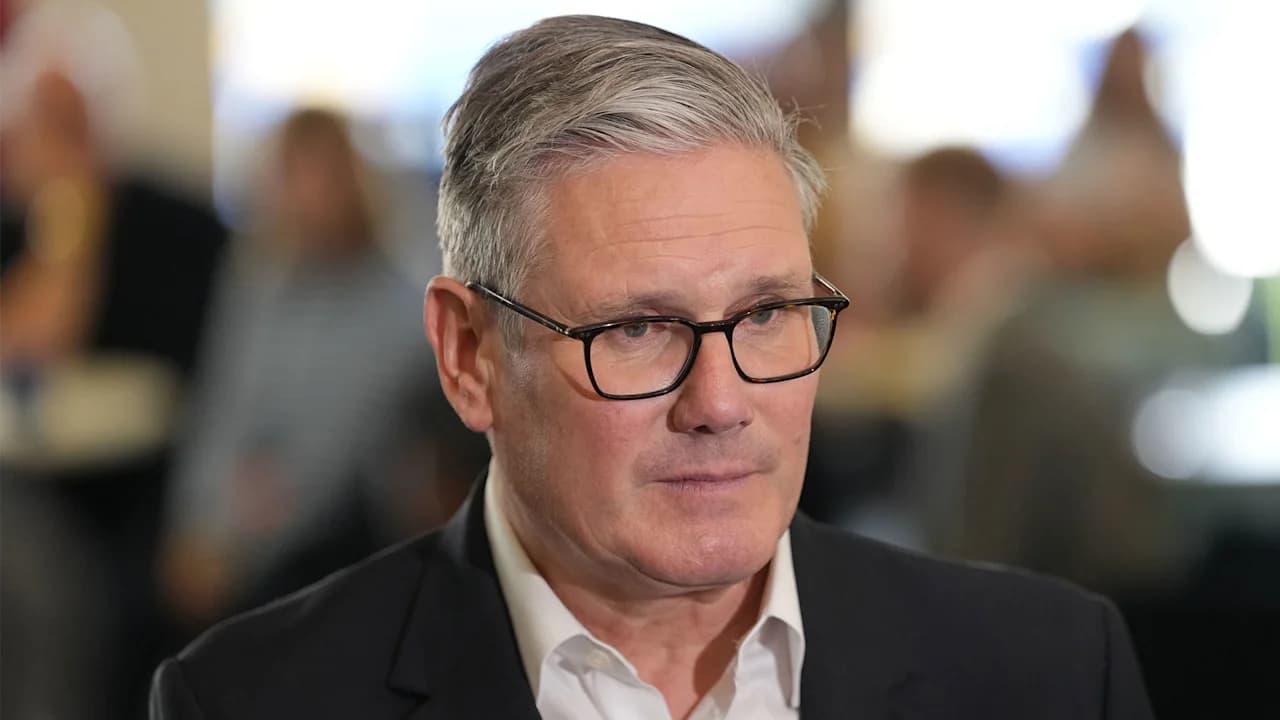
Photo via Fast Company
UK Prime Minister Keir Starmer is navigating a leadership crisis within his own Labour Party, with roughly 80 backbenchers calling for his resignation following significant losses in local elections. According to reports, nearly one-fifth of Labour's House of Commons representation has demanded he either step down or announce a departure timeline. Starmer remains defiant, insisting he will not resign and that the formal process to trigger a leadership challenge has not yet been initiated—which requires 81 lawmakers' support under party rules.
The political turbulence is already rippling through financial markets. Interest rates on British government bonds have risen faster than comparable nations, a signal that investors are demanding higher premiums to hold UK debt amid uncertainty. Starmer himself acknowledged that the destabilization carries 'a real economic cost for our country and for families,' highlighting how leadership crises can translate directly into measurable financial consequences. This pattern of political uncertainty driving market volatility is a cautionary tale for businesses with UK exposure.
The underlying causes of Starmer's political troubles include economic underperformance, policy missteps, and controversial appointments—particularly his selection of Peter Mandelson as US ambassador despite connections to Jeffrey Epstein. Labour's defeat in local elections came as the party lost ground to both right-wing and left-wing challengers, reflecting broader fragmentation in UK politics. These vulnerabilities suggest the government may struggle to maintain the policy consistency that international investors and business partners require.
For Charlotte-area companies with UK operations or trade relationships, this political uncertainty warrants close attention. Businesses relying on stable regulatory environments or government partnerships should monitor whether leadership changes might affect contracts, trade terms, or investment climates. While Starmer's position appears defensible for now—no challenger has formally emerged—the episode underscores how quickly political capital can erode and how rapidly market confidence can shift when governance comes into question.