Photo via Fortune
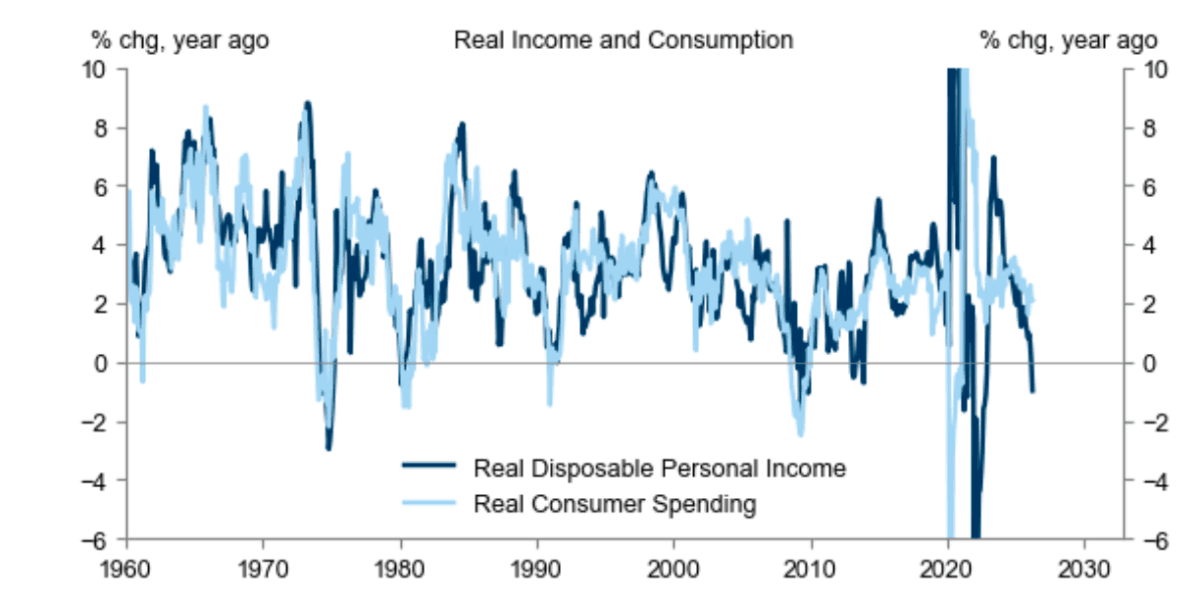
According to recent analysis from Goldman Sachs, the growth rate of real wages—income adjusted for inflation—has decelerated to levels typically associated with economic downturns, even as the U.S. technically avoids recession territory. This divergence between headline economic data and workers' actual purchasing power presents a troubling picture for households across the Charlotte region, where cost of living has risen alongside national trends in housing, healthcare, and consumer goods.
The squeeze on real incomes suggests that Charlotte-area workers may experience diminished discretionary spending in coming months, with potential ripple effects across the region's retail, hospitality, and service sectors. Local businesses that depend on consumer confidence and spending patterns should prepare for shifting demand as residents prioritize essential expenses over discretionary purchases.
For Charlotte employers, particularly those in competitive talent markets like technology and healthcare, the stagnation in wage growth relative to inflation could complicate recruitment and retention efforts. Workers facing erosion of their actual purchasing power may seek positions offering stronger compensation packages or benefits that offset rising living costs, intensifying competition for skilled labor.
Financial advisors in the Charlotte area recommend that households reassess budgets and savings strategies in light of these trends. Business leaders should consider how evolving consumer behavior and labor market dynamics may reshape their operational and growth strategies over the coming quarters.