Photo via Fast Company
The U.S. manufacturing sector faces a critical bottleneck: a severe shortage of skilled welders. According to the American Welding Society, the nation needs to hire roughly 80,000 new welders annually to meet demand, with a projected shortfall of over 320,000 professionals by 2030. For Charlotte-area manufacturers and fabricators, this talent gap threatens growth and project timelines, particularly in heavy industry and construction-related sectors.
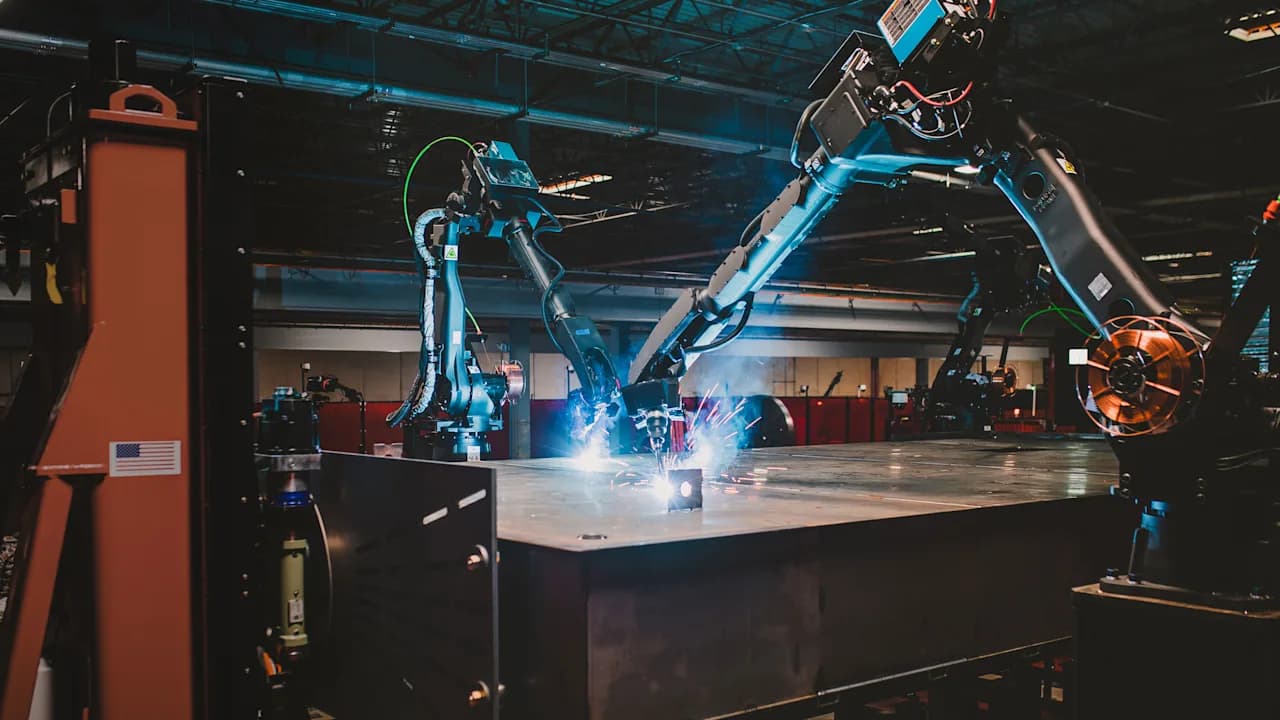
Path Robotics, a Columbus-based startup backed by $341 million in venture funding, is tackling this challenge with autonomous welding systems designed for complex, unstructured environments. The company's latest innovation, Rove, pairs a robotic welding torch with Boston Dynamics' quadruped robot to navigate shipyards, data centers, and electrical infrastructure projects—settings where traditional fixed automation falls short. The system uses advanced AI to adapt to variable conditions rather than repeating single motions endlessly.
CEO Andy Lonsberry founded Path Robotics after experiencing firsthand the manufacturing labor crisis while launching a family vehicle business. Rather than relocating to Silicon Valley, the brothers intentionally remained in the Midwest to stay connected with manufacturers' real challenges. This proximity-focused strategy resonates with Charlotte's own regional manufacturing community, where staying close to operations and understanding local pain points drives innovation.
Path's existing welding technology has already helped Midwest fabricators like Minnesota's Millerbernd and Wisconsin's Maystele expand operations. As the company prepares to commercialize Rove in 2027, Charlotte manufacturers in metals, construction, and infrastructure sectors should monitor how autonomous welding could reshape workforce planning and competitive positioning in the region's industrial economy.