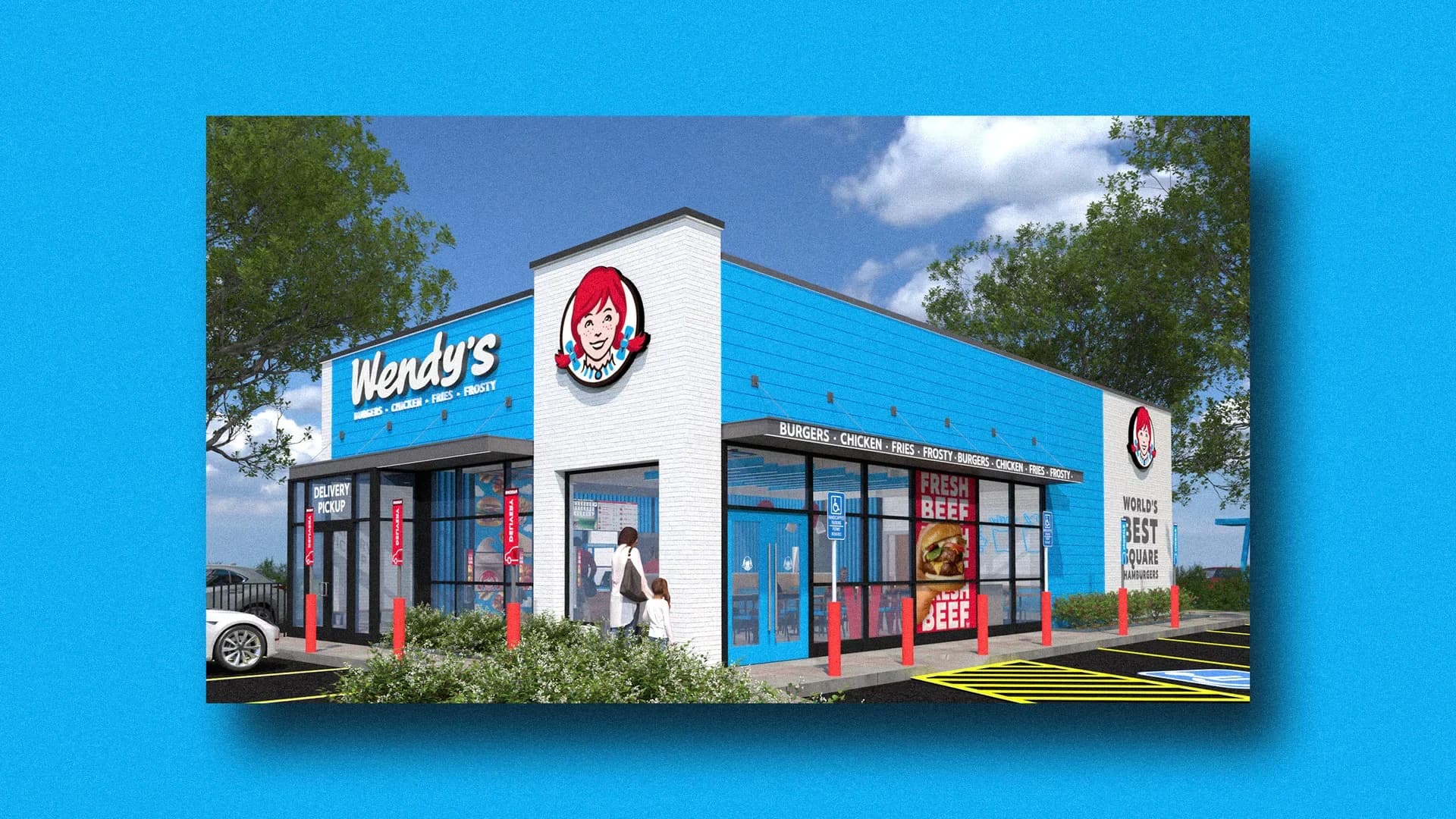
Photo via Inc.
Wendy's is making a bold departure from decades of brand tradition as international franchisees gain the option to adopt light blue restaurant designs instead of the chain's signature red. According to reporting from Inc., this shift represents more than a cosmetic update—it's a strategic visual cue designed to communicate the availability of digital ordering and mobile-first services to customers.
The move challenges a fundamental principle of food service branding, where warm colors like red have long been considered appetite stimulants and emotional triggers that drive purchase decisions. By introducing blue, Wendy's is prioritizing messaging about technology adoption and operational innovation over traditional psychological color theory, signaling where the quick-service restaurant industry is heading.
For Charlotte-area franchisees and business owners, this flexibility highlights how major brands are adapting to changing consumer expectations around ordering methods and digital convenience. The experiment underscores the growing importance of visual branding that communicates operational capabilities, not just product appeal, as younger consumers increasingly expect seamless digital experiences.
Whether the color shift ultimately influences consumer appetite remains to be seen, but the decision reflects a broader industry trend of aligning restaurant design with the digital transformation of food service. As franchisors give operators more flexibility in market-specific branding, Charlotte businesses in the QSR space should monitor how these experiments impact customer perception and spending habits.