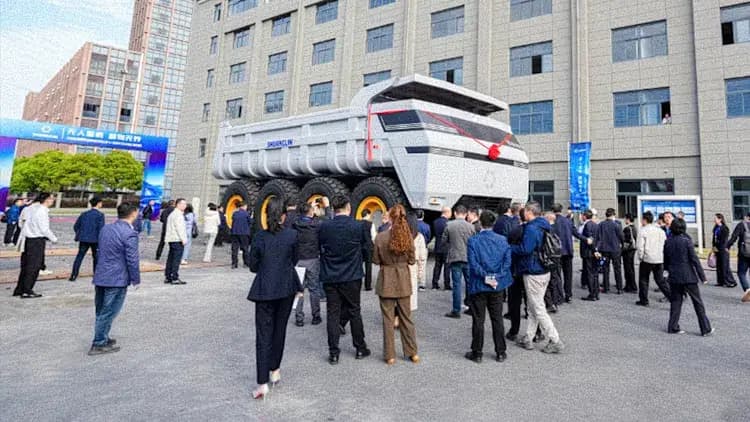
Photo via Inc.
Artificial intelligence's impact on business extends far beyond humanoid robots and white-collar automation. According to Inc., a new generation of autonomous industrial equipment—including massive driverless mining trucks developed in China—is reshaping how companies approach equipment operation and workforce planning. These machines represent a tangible example of AI moving into the physical world at scale, operating in some of the most demanding industrial environments.
The driverless mining trucks showcase AI capabilities that go beyond simple automation: these vehicles must navigate complex terrain, respond to dynamic conditions, and operate safely alongside human workers. For Charlotte-area manufacturers and logistics companies, the technology signals an accelerating shift in how equipment is managed and operated. Industries relying on heavy machinery and fleet operations may need to reassess their operational strategies as autonomous systems become more viable and cost-effective.
The implications extend across multiple sectors relevant to the Charlotte region. Companies in mining, construction, manufacturing, and logistics are beginning to evaluate how autonomous equipment could improve safety, reduce labor costs, and increase operational efficiency. Early adopters in these industries may gain competitive advantages, while businesses slower to adapt could face pressure from more technologically advanced competitors.
As AI continues to evolve beyond software applications, Charlotte business leaders should monitor how autonomous industrial systems develop and consider what adoption might mean for their operations. The transition from human-operated to AI-managed equipment will likely create new skill demands, require workforce retraining initiatives, and reshape traditional operational models—making it a critical issue for companies across the region's manufacturing and industrial base.