Photo via Fast Company
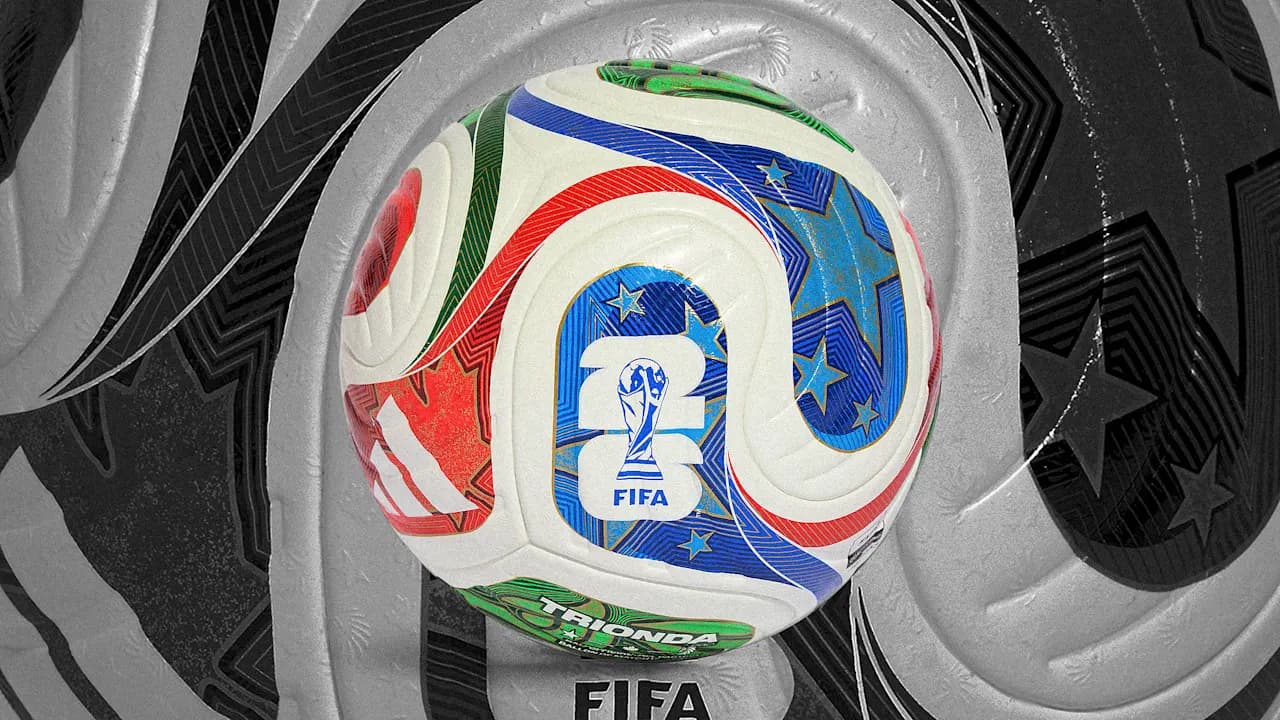
Every four years, FIFA and Adidas introduce a redesigned match ball for the World Cup, forcing players and teams to adapt to new aerodynamic properties. The 2026 tournament will feature the Trionda, a four-panel ball—the fewest panels in men's World Cup history—marking a significant shift in sports equipment engineering. The design represents decades of iteration, from hand-sewn leather balls in 1930 to today's engineered aerodynamic surfaces.
According to engineering research conducted at the University of Tsukuba, the Trionda's performance differs markedly from previous World Cup balls. Wind tunnel testing revealed that the ball reaches its critical drag-crisis speed at approximately 27 mph, lower than recent predecessors like the 2022 Al Rihla. This engineering decision means the ball will perform more predictably during corner kicks and free kicks, avoiding the erratic flight patterns that plagued the notorious 2010 Jabulani ball.
The Trionda also incorporates embedded chip technology positioned within one panel's layer, enabling semi-automated offside detection for VAR systems. This represents a shift from earlier designs where the measurement unit was centrally suspended. The innovation demonstrates how sports equipment now bridges physical performance with digital officiating systems—a trend that extends beyond soccer into other professional sports.
For manufacturing and sports equipment companies, the Trionda illustrates how rigorous testing and precision engineering can solve real-world performance challenges. The intentional grooves and surface texturing compensate for the ball's reduced panel count, showing that fewer components don't necessarily mean simpler design. As the World Cup approaches, the ball will face its ultimate test on the field, where players will quickly determine whether engineering theory translates to competitive advantage.