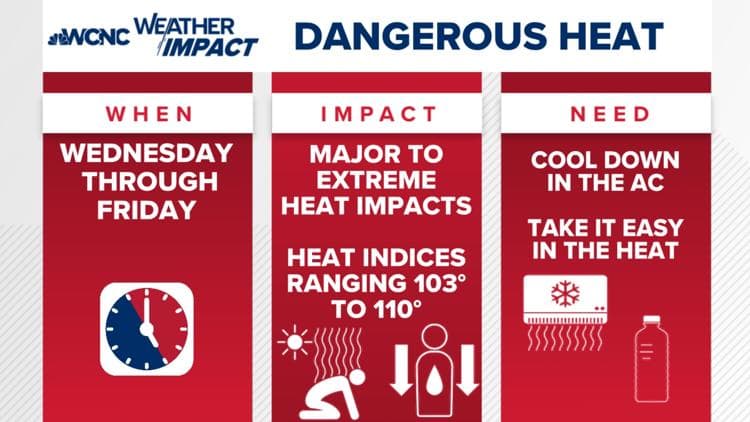
Photo via WCNC Charlotte
The Carolinas are bracing for a dangerous heat event this week, with heat index values expected to exceed 100 degrees across the Charlotte region, according to WCNC Charlotte. The combination of high temperatures and humidity creates conditions that pose significant risks to both workers and business continuity, particularly for industries reliant on outdoor operations or large-scale facilities.
For Charlotte employers, the extreme heat presents operational and safety challenges. Logistics and construction firms may need to adjust work schedules, increase hydration stations, and modify shift patterns to protect workers from heat-related illness. Retail and service businesses could experience energy demand spikes as cooling systems work overtime, potentially impacting utility costs during peak hours.
Energy providers across the region are likely monitoring demand carefully, as residential and commercial air conditioning usage typically surges during heat events. Businesses are advised to review their emergency preparedness plans, ensure HVAC systems are functioning optimally, and communicate heat safety protocols to employees. Those in temperature-sensitive industries—including healthcare, food service, and data centers—should verify backup cooling systems are operational.