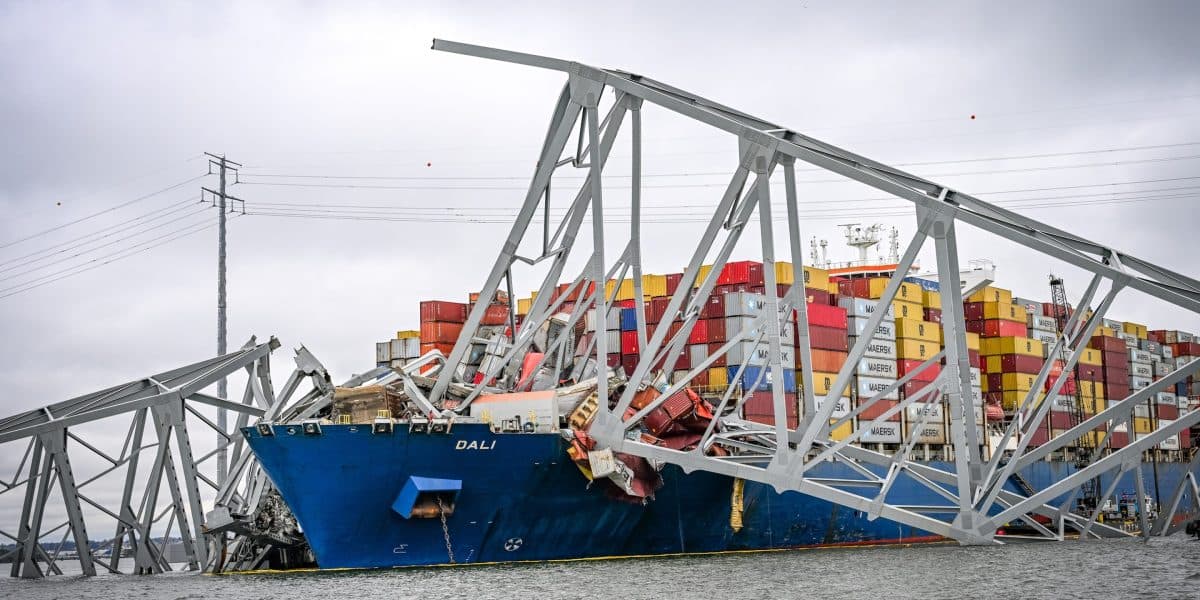
Photo via Fortune
Federal prosecutors have filed charges against Synergy Marine and a company employee in connection with the Francis Scott Key Bridge collapse in Baltimore that resulted in six deaths, according to Fortune. The charges center on allegations that the vessel operator and the employee were aware of significant power system failures aboard the Dali before it departed the port.
The incident underscores critical vulnerabilities in maritime infrastructure and operational oversight that could have ripple effects across regional supply chains. For Charlotte-area businesses reliant on port operations and shipping logistics, the case highlights the importance of stringent safety protocols and equipment maintenance standards in the maritime industry.
The collision that destroyed the bridge in March 2024 disrupted one of the nation's busiest ports and caused significant economic disruption to businesses nationwide. This enforcement action signals heightened federal scrutiny of vessel operators' compliance with safety requirements and their responsibility to report equipment malfunctions before embarking.
The charges represent a significant legal development in maritime accountability. For logistics professionals and supply chain managers in the Charlotte region, the case reinforces the need for vigilance when selecting shipping partners and understanding the regulatory landscape governing ocean transportation.