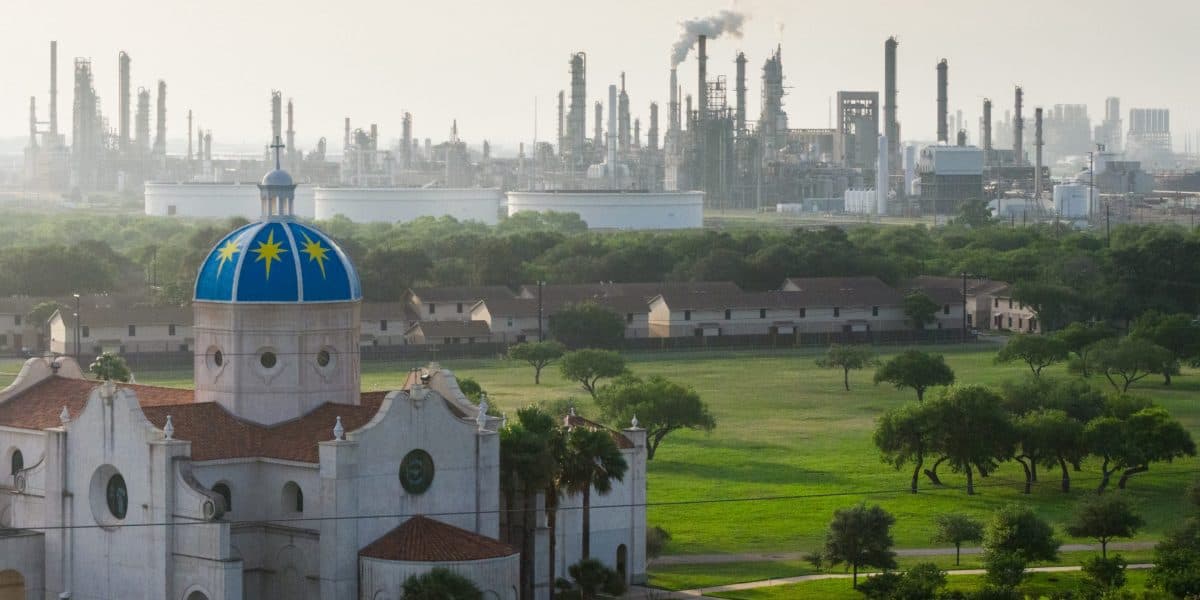
Photo via Fortune
Corpus Christi, Texas—home to America's largest oil export terminal—faces an unprecedented water shortage that has forced local authorities to implement drastic conservation measures. According to Fortune, the city's water reservoirs have dropped to just 8% capacity, creating an emergency scenario that threatens both residential access and industrial operations. For two years, residents have been prohibited from maintaining green lawns, signaling the severity of the ongoing drought affecting the region.
The crisis has prompted difficult choices among city officials weighing immediate needs against long-term solutions. A proposed $1.2 billion desalination project, which could have provided an alternative water source, was shelved due to cost concerns. As water levels continue to decline, December emergency protocols could soon impose strict household usage caps, further straining residents and businesses dependent on reliable water access in the petrochemical hub.
This situation underscores vulnerabilities in America's energy infrastructure that extend beyond fuel production. The Corpus Christi export facility processes crude oil bound for global markets, and any operational disruption could affect energy prices and supply stability. For Charlotte-area businesses dependent on stable energy costs and supply chain reliability, regional water crises at major industrial hubs represent an emerging risk factor worth monitoring.
The Corpus Christi predicament highlights broader infrastructure challenges facing major U.S. industrial centers, particularly in water-stressed regions. As climate pressures intensify, companies and municipalities nationwide face similar decisions about investing in resilience versus accepting operational uncertainty. For business leaders in the Southeast, the situation offers a cautionary lesson about the interdependencies between environmental constraints and economic stability.