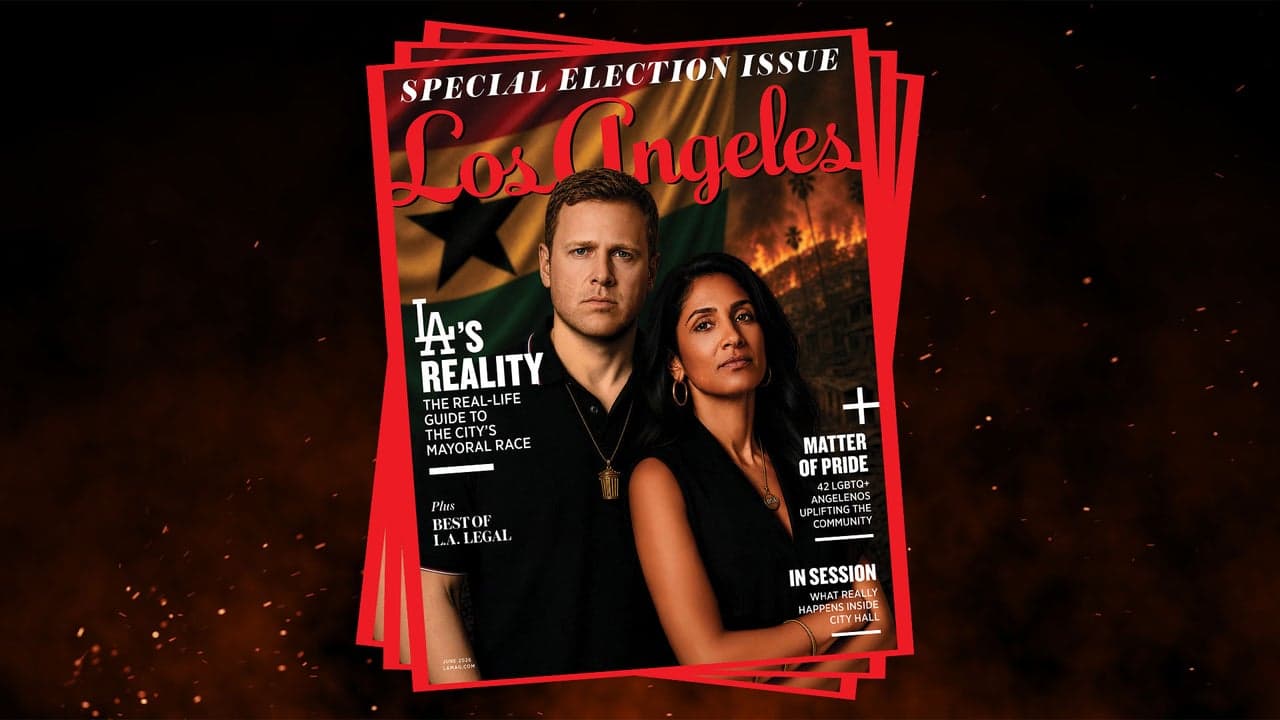
Photo via Fast Company
Los Angeles magazine's recent election issue cover has ignited a firestorm of criticism after the publication chose to feature artificially generated images of mayoral candidates rather than authentic photography or commissioned artwork. The decision, made by the magazine's co-owner and defense attorney Mark Geragos, was framed as a commentary on how AI influences contemporary elections. However, the execution backfired spectacularly, with the cover drawing widespread condemnation on social media and from design professionals who questioned the fundamental editorial judgment.
The backlash reveals a troubling pattern emerging in the media industry: the assumption that AI-generated content can serve as a cost-cutting substitute for professional creative work. Critics pointed out that real photographs of the candidates existed, and a qualified graphic designer could have completed the assignment in minimal time. According to reporting, editorial staff at the magazine itself pushed back against the AI approach before publication, suggesting internal conflict over the decision.
For Charlotte-area media and design professionals, this serves as a timely reminder about brand reputation and audience trust. Publications that have invested in distinctive visual identities—whether through commissioned photography, illustration, or graphic design—build credibility that generic AI-generated imagery cannot replicate. The damage to Los Angeles magazine's reputation illustrates how cost-cutting measures can ultimately prove far more expensive in terms of lost readership and diminished prestige.
The broader lesson extends beyond traditional media to any Charlotte business considering AI shortcuts in creative and communications work. Audiences increasingly value authenticity and human craftsmanship. Rather than viewing AI tools as replacements for skilled professionals, businesses that use these technologies as enhancements while maintaining investment in creative talent are more likely to build lasting customer loyalty and market differentiation.