Photo via Fortune
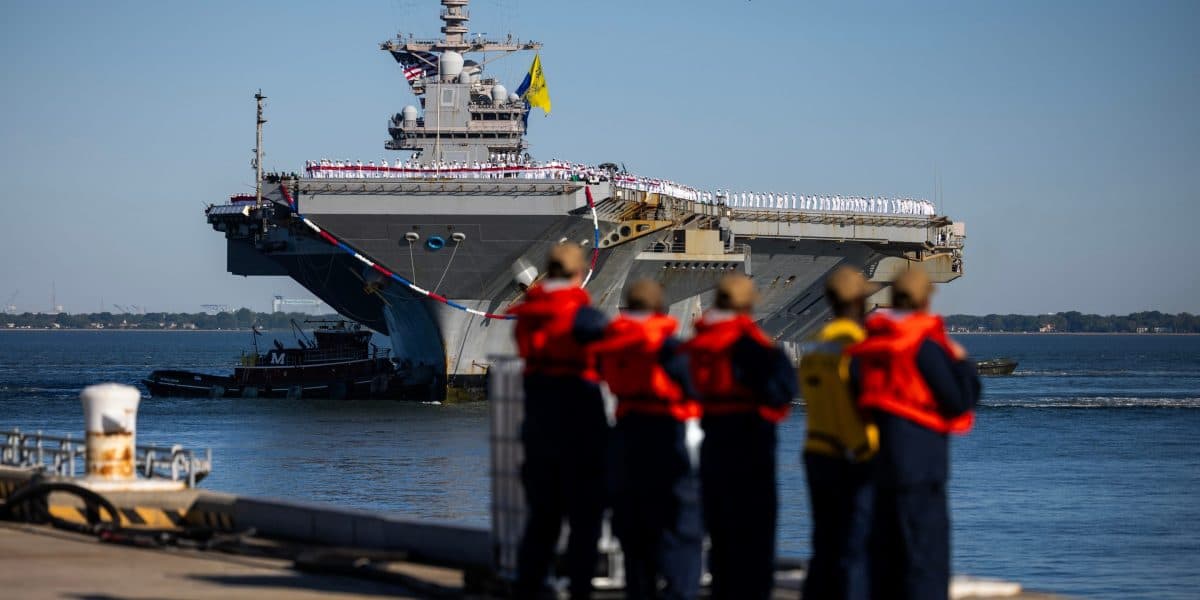
The USS Gerald R. Ford, the world's largest aircraft carrier, has returned from an 11-month deployment that marks the longest naval mission since the Vietnam War era, according to Fortune. The carrier strike group supported multiple military operations across the Middle East, including operations related to Iranian conflicts and interventions in regional political matters. The extended deployment underscores the sustained operational demands placed on U.S. naval assets in strategically vital regions.
The carrier and its accompanying naval vessels received the Presidential Unit Citation in recognition of their service during the Iran conflict. This prestigious award acknowledges the exceptional performance and sacrifice of the crew and supporting military personnel who sustained operations across multiple theaters for an extended period. The recognition reflects the coordination and endurance required to maintain such a large-scale military operation.
From a logistics perspective, deployments of this magnitude demonstrate the complexity of managing personnel, supplies, and equipment across global distances for nearly a year. The Ford's extended tour highlights challenges in crew rotation, maintenance scheduling, and supply chain coordination that mirror operational pressures faced by large corporations maintaining global operations. Military logistics operations offer insights into resource management under sustained demand.
For Charlotte-area defense contractors and logistics providers supporting naval operations, such extended deployments represent ongoing opportunities within the defense supply chain. The success of carrier strike group missions depends on specialized equipment, maintenance support, and supply services—sectors where regional companies may participate. Understanding the scale and duration of these operations provides context for defense industry growth in the Carolinas.