Photo via Fast Company
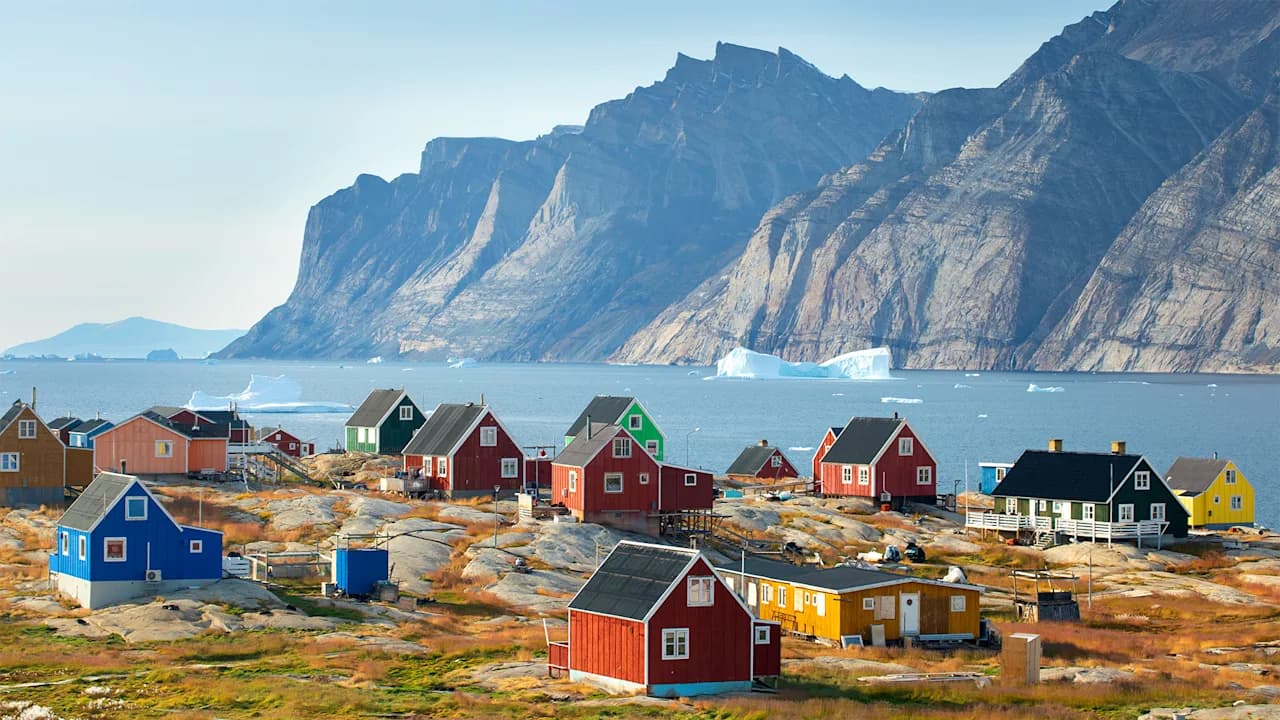
Denmark's decision five decades ago to protect 40% of Greenland—an area larger than all of Yellowstone combined—offers a counterintuitive business principle for Charlotte executives. While the move appears economically irrational on its surface, it reflects a deeper understanding of how long-term prosperity depends on boundaries. For companies operating in the Southeast, where water scarcity, flooding, and supply chain disruptions increasingly threaten operations, this Arctic precedent suggests that treating every natural system as tradable capital may be strategically shortsighted.
The core problem stems from how modern capitalism frames nature. Over the past century, forests became 'natural capital,' water became a tradable commodity, and ecosystems became inputs to be optimized for short-term returns. This approach works only when resources appear infinite. But monitored wildlife populations have declined roughly 70% in the past fifty years, and the living systems supporting clean air, stable water cycles, and fertile soil are degrading faster than they can regenerate. For Charlotte-area manufacturers, food producers, and logistics companies dependent on these systems, the economic math has fundamentally shifted.
The author argues that once natural infrastructure is converted into financial assets subject to market pricing—through carbon credits, biodiversity offsets, or ecosystem service valuations—it remains vulnerable to destruction the moment a higher-value use emerges. History shows forests preserved for carbon value get logged when timber prices spike; wetlands protected for ecosystem services get drained for development. The algorithm performs exactly as designed. Instead, the solution involves explicitly designating critical life-support systems off-limits to economic trade-offs, then allowing vigorous market competition within those boundaries. Palm oil plantation research demonstrates this works: setting aside just 20% of land for biodiversity maintains longer productivity and lower operational risk, generating better medium-term returns despite short-term yield reductions.
For Charlotte business leaders, the implication is clear: systems providing climate regulation, water purification, and soil regeneration function as essential infrastructure worthy of protection by design rather than pricing mechanisms. Companies that recognize these constraints early and build operations around ecological regeneration—not depletion—position themselves for stability in an increasingly resource-constrained economy. The Greenland example shows that forgoing short-term extraction opportunities isn't charitable sacrifice; it's sophisticated long-term business strategy.